
3 | District administration under British Empire
By Gaurav Kalyani
Published on: 22 May 2026
The British empire created a complex system of governance that followed a rigid hierarchy. At the heart of this system lay the district—a territorial unit of governance that became the fundamental building block of British rule. The district officer, whether called Collector, Magistrate, or Deputy Commissioner, embodied the authority of the Raj and served as the crucial interface between the imperial government and the Indian population.
This article explores how the district administration during the British colonial period formed and operated. To learn more about the evolution of British districts, read our article in the District Evolution series.
Evolution of district administration
Lord Cornwallis (Governor-General, 1786-1793) is often credited with creating the framework of modern district administration in India. He implemented the Cornwallis Code of 1793, which divided Bengal proper into sixteen very large districts. His reforms established the Collector as the key figure in district governance, though initially with limited powers (Dodwell, 1932).

The Cornwallis system separated judicial and executive functions, with district judges presiding over courts and Collectors focusing on revenue collection. This separation reflected British constitutional principles but proved impractical in Indian conditions. Collectors found themselves unable to resolve disputes that arose from revenue matters, leading to delays and confusion (Dodwell, 1932; Niaz, 2019).
During this time, significant new territories were added and as the British territory grew to include the Deccan and Khandesh in 1818, the administration became more complex. The first half of the nineteenth century witnessed a fundamental debate about the nature of district administration. Two competing schools of thought emerged, each with different implications for the role of the district officer (Dodwell, 1932; Niaz, 2019).
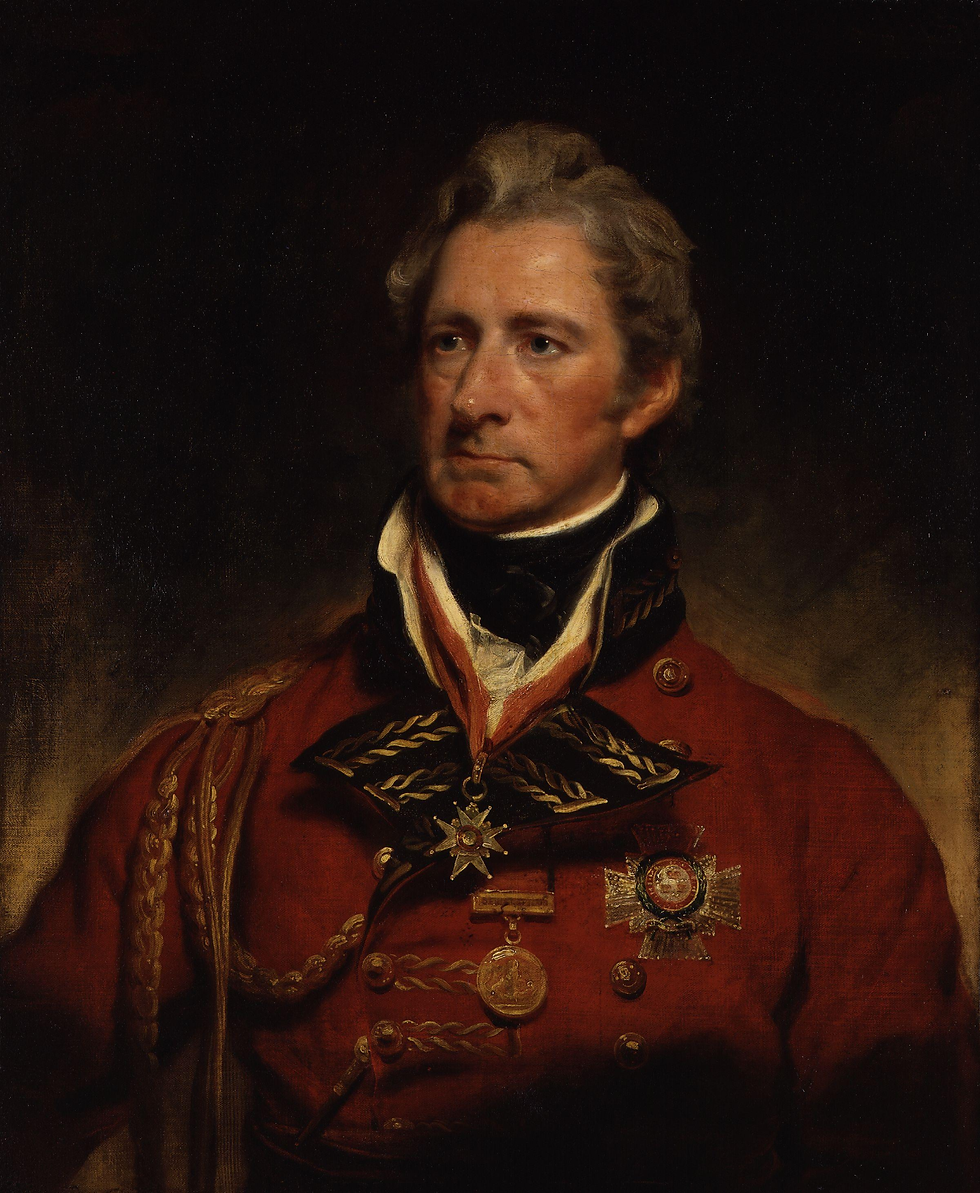
The Munro school, associated with Thomas Munro (Governor of Madras, 1814-1827), advocated for the concentration of power in the Collector-Magistrate. This system was implemented in the Madras and Bombay presidencies, where Collectors became the undisputed heads of their districts. The opposing view, associated with Charles Napier (Governor of Sind, 1843-1847), argued for specialized police forces separate from the revenue administration (Dodwell, 1932; Niaz, 2019).
Napier's system, first implemented in Sind, created a self-contained police hierarchy with its own officers, distinct from the Collector-Magistrate. This model drew on Irish Constabulary precedents and emphasized professional policing rather than personal authority. The debate was resolved in favor of the Munro school for most of British India, though the Napier model influenced police organization (Dodwell, 1932; Niaz, 2019).
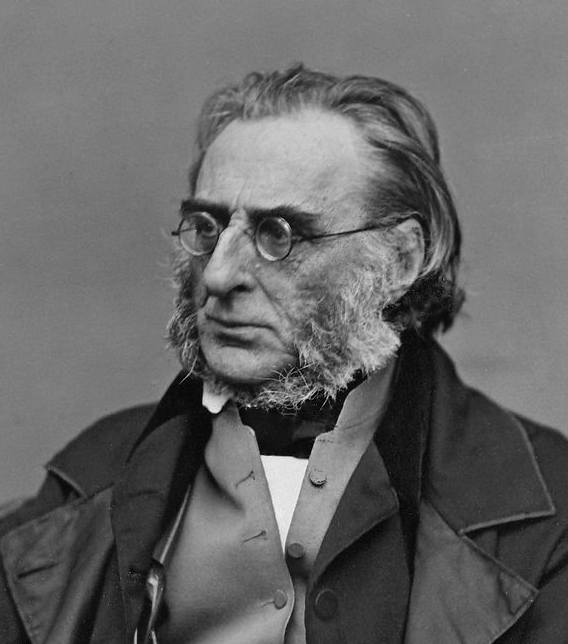
In 1829, Lord William Bentinck created Commissioners of Revenue and Circuit, each placed in charge of a Division embracing several districts to improve supervision. To bring the government closer to the rural population, districts began to be split into Subdivisions starting in 1845. The Charter Act of 1853 ended the Company's monopoly on appointments and introduced open competitive examinations (1854) to ensure a merit-based civil service (Dodwell, 1932; Niaz, 2019).
The most significant reform of the period was the reunification of Collector and Magistrate roles in 1859. This decision, implemented after the 1857 uprising, recognized that the separation of powers had proved impractical in Indian conditions. The Collector-Magistrate became the undisputed head of the district, responsible for revenue collection, law and order, and general administration (Mathew, 2020).
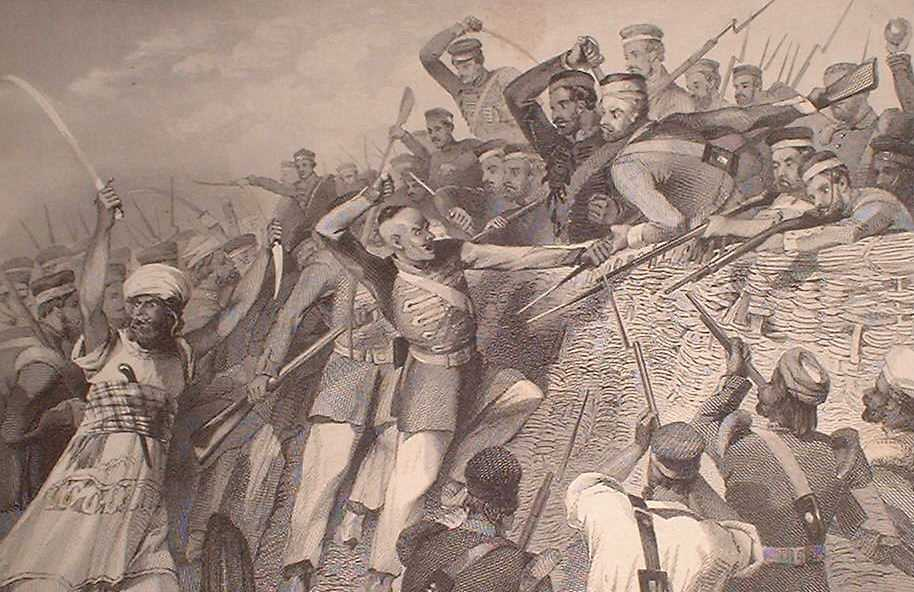
The uprising of 1857-1858 profoundly affected district administration, leading to several changes. The recruitment base for the army shifted to the Punjab and other ‘martial races’. The police were reorganized and expanded. The Collector-Magistrate role was restored in Bengal. More fundamentally, the uprising reinforced the belief that British rule depended on the character and ability of individual district officers.
The later nineteenth century witnessed the gradual expansion of bureaucratic structures. The district officer's role shifted from direct management to coordination and supervision. The Report of the Salaries Commission (1886) documented the increasing complexity of district administration. Collectors were responsible for filing 146 different reports annually, and the volume of routine paperwork had grown enormously (Kavanaugh, 2017; Mathew, 2020).
The Commission recommended measures to reduce the Collector's burden and restore his capacity for independent decision-making. From the 1860s onward, Indians were gradually admitted to higher positions in district administration. The Indian Civil Service was opened to competitive examination in 1853 (Kavanaugh, 2017; Niaz, 2019).
By 1886, Indians held 37 percent of ICS positions in Bengal, though they remained underrepresented in senior executive roles. Provincial services were Indianized earlier and more completely. By 1893, most Deputy-Collectors and Deputy-Magistrates were Indian. The growth of Indian participation in district administration created new tensions but also provided essential continuity after the British left India (Kavanaugh, 2017; Niaz, 2019).
Table 2: Evolution of District Administration (1793-1947)
Period | Key Features | Challenges |
1793-1829 | Separation of judicial and executive functions | Inefficiency; lack of local authority |
1829-1859 | Commissioner system; Collector-Magistrate | Over-reliance on individual officers |
1859-1905 | Unified Collector-Magistrate; bureaucratic growth | Paperwork; reduced personal contact |
1905-1919 | Partition; non-regulation systems | Political pressures; nationalist opposition |
1919-1935 | Dyarchy; provincial autonomy | Complexity; divided authority |
1935-1947 | Provincial autonomy; Indian ministers | Transition; communal violence |
Source: Mathew, 2020
Structure of district administration
The Collector-Magistrate was the central figure in British district administration. His functions can be categorized into several areas (Dodwell, 1932, Mathew, 2020):
Revenue Functions: As Collector, the district officer supervised land revenue assessment and collection, managed government estates, conducted settlements, and maintained land records. He was also responsible for overseeing irrigation projects, and managing famine relief.
Judicial Functions: As Magistrate, the district officer exercised criminal jurisdiction, could try cases, and maintained law and order. The combination of revenue and judicial powers enabled on-the-spot decision-making but also raised concerns about the concentration of authority.
Executive Functions: The Collector-Magistrate coordinated all government activity in the district, including public works, education, health, and forestry. He was responsible for municipal and local government, for prison administration, and for the management of government property.
Political Functions: The district officer served as the government's representative to the Indian population. He maintained contact with local political leaders, mediated disputes, and provided intelligence to provincial authorities.
District administration was supported by a hierarchy of British and Indian officers. The Collector-Magistrate was assisted by Joint-Magistrates, Deputy-Magistrates, and Assistant-Magistrates, depending on the district's size and importance. Each subdivision was under subdivisional officers. In non-regulation provinces, the Deputy Commissioner exercised even broader powers, often combining functions that were separated elsewhere (Dodwell, 1932, Mathew, 2020).
Comparison between British and India Districts
The differences between pre-British Indian administrative divisions and the British districts lay in their nature of administration and were characterized by a transition from arbitrary, personalized rule to a systematic, codified, and institutionalized governance. As a comparison, during the Mughal period, the territories under the Mughal empire were divided into 12 Subahs (Provinces), 100 Sarkars (divisions) and almost 3000 Paraganas (districts). In contrast, the British presidency of Bengal by 1905 had evolved into 48 districts and 134 subdivisions (Kavanaugh, 2017; Niaz, 2019).
In the pre-British era, the district administration was largely under semi-military officials who handled law and order and revenue collection. The British replaced this with the Collector-Magistrate. This officer became the lynchpin of the British state, personally embodying its power while acting as the primary point of contact for subjects. British rule converted the pre-British arbitrary run estates into a defined public sphere where administration was bound by a law (Niaz, 2019; Mathew, 2020).
Lord Cornwallis initially sought to minimize executive discretion by making the Collector answerable to the judiciary. However, that led to massive case backlogs, prompting a shift under Lord William Bentinck, towards more concentration of powers with the district officer, who acted as a local governor with combined fiscal and judicial authority (Niaz, 2019; Mathew, 2020).
The recruitment of district officials in the pre-British era was more based on patronage and personal loyalty to the autocrat. The British state introduced a civilian bureaucracy through Indian Civil Service (ICS) and the recruitment took place through open competitive examinations after 1853. The British administration developed specialized departments such as Forest, Education and Public Works, which gradually evolved to become distinct departments which eventually reduced the workload on the district officer (Niaz, 2019; Mathew, 2020).
The districts in India also greatly differed from their British counterparts in Great Britain. The 1872 census report notes that Indian districts were significantly larger by comparison, than administrative divisions in Britain. There were more than 130 districts in India that were larger than West Riding, which was the largest county division in England. Entire provinces such as North West Province, Punjab and Bengal, sometimes dwarfed the size of England and Wales combined (Kavanaugh, 2017; Mathew, 2020).
In terms of population density, while the average density was slightly higher in England, specific Indian districts had significantly higher concentrations of population than their British counterparts. The average density for districts in England was around 420, while districts under British administration in India had an average density of 211 persons per square mile. In the valley of the Ganges, covering an area larger than Spain, the average density was 480 per square mile, exceeding the most densely populated countries in Europe at the time (Niaz, 2019; Mathew, 2020).
Legacy of British district administration
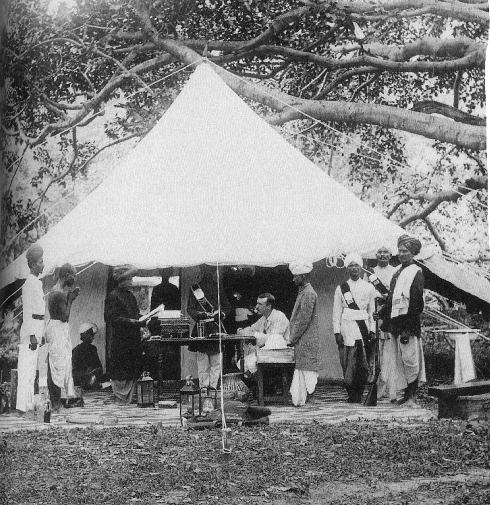
Mathew (2020) argues that despite critiques from historians regarding the British bleeding off India’s economy, the district officer often functioned as a benevolent mediator during communal riots and famines, frequently being appreciated by the rural population. Memoirs of many district officers describe a life of constant touring, often on horseback, and holding camp to dispense justice directly to villagers.
The district administration system created by the British left a profound legacy in India. Post-1947, Sardar Vallabhbhai Patel championed the retention of the administrative structure, leading to the creation of the Indian Administrative Service (IAS). The Collector-Magistrate, renamed District Magistrate in independent India remains the key figure in district governance (Mathew, 2020).
The hierarchical structure of divisions, districts, and subdivisions persists. The revenue and police systems, though modified, retain much of their colonial structure. The tensions that characterized colonial district administration between discretion and procedure, between personal authority and bureaucratic process, between central control and local autonomy, remain relevant to contemporary governance in India (Mathew, 2020).
Sources:
Dodwell, H. H. (Ed.). (1932). The Indian Empire: Volume VI. Cambridge University Press.
Kavanaugh, A. (2017). 'Our Rule in India rests wholly on ourselves’—The District Officer in Bengal 1850 – 1905 [PhD Thesis]. King’s College London.
Mathew, C. K. (2020). The Historical Evolution of the District Officer: From Early Days to 1947. Azim Premji University
Niaz, I. (2019). The State During the British Raj—Imperial Governance in South Asia 1700-1947. Oxford University Press.


Comments