
1 | British Annexation of India: History of Territorial Expansion
Updated: Aug 11
By Shivakumar Jolad and Gaurav Kalyani
Published on: 7 May 2026
The Indian subcontinent, unlike China, never experienced a single empire spanning its entire modern geography. From the Mauryans to the Mughals, Indian political history was characterized by cycles of consolidation and fragmentation. Even at the peak of Mughal Empire, under Aurangzeb, despite stretching from Afghanistan to the Bay of Bengal, faced relentless resistance from the rising Marathas in the Deccan. His campaigns in Deccan drained imperial resources and sowed the seeds for its decay.
His death in 1707 marked the beginning of a steady imperial collapse, as weak successors, factional court politics, and assertive regional governors gave way to an era of deepening anarchy. Foreign invasions from Nadir Shah and Ahmad Shah Durrani further weakened the empire (Dodwell, 1932).
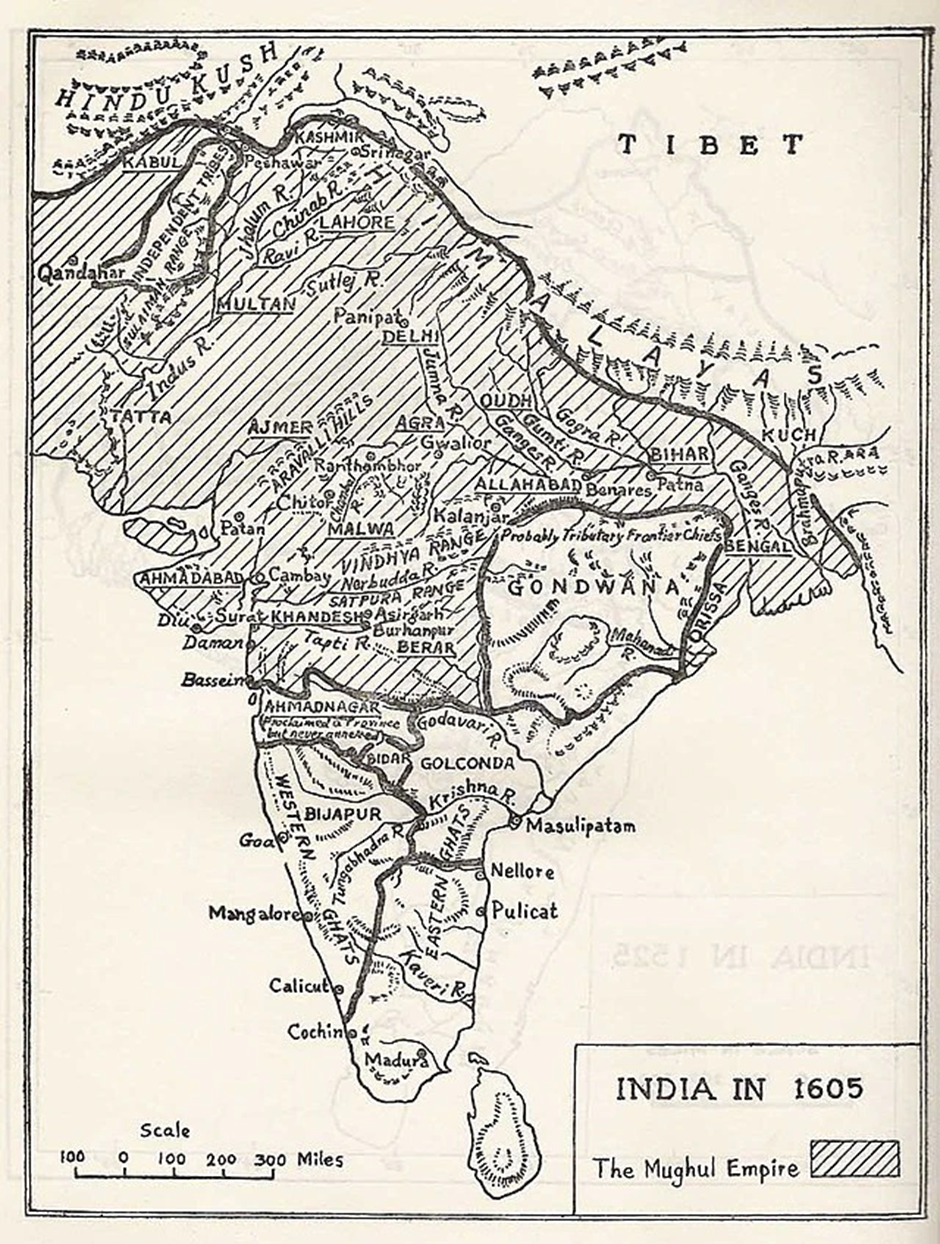
Amid this disintegration, the Maratha Empire emerged as the most formidable power attempting to fill the void. Founded by Chatrapati Shivaji in the seventeenth century, the Marathas expanded dramatically under Chatrapati Shahu. His Prime Minister (Peshwa) Baji Rao I expanded maratha power across much of India, transforming into a confederacy that dominated much of India by the mid-eighteenth century. Yet this expansion relied heavily on coercive revenue extraction, fostering local resentment (Dodwell, 1932).
All the while, internal rivalries among semi-autonomous Maratha chiefs: the Scindias, Holkars, Bhonsles, and Gaekwads, steadily eroded centralized authority (Muir, 1917; Dodwell, 1932). A decisive blow came at the Third Battle of Panipat in 1761, in which the loosely held confederacy was defeated by Ahmad Shah Durrani, leaving the confederacy fragmented and vulnerable (Dodwell, 1932).
This resulted in a landscape of warring successor states of Awadh, Bengal, Hyderabad, Mysore, Sikh and Jat Kingdoms, creating a volatile power vacuum. European trading companies, most notably the British East India Company, exploited these rivalries through strategic alliances and superior military organization (James, 1997). Beginning with the political conquest of Bengal after Plassey (1757) and Buxar (1764), and culminating in the defeat of Mysore (1799) and the Marathas in a series of Anglo-Maratha Wars (1775–1818), the British systematically dismantled indigenous powers (Dodwell, 1932).
By the end of the Third Anglo-Maratha War in 1818, the last remnants of Maratha sovereignty had been extinguished, paving the way for the consolidation of British paramountcy across the subcontinent (Dodwell, 1932).
Genesis
The ascendancy of British power in India, culminating in the formation of its modern political map, unfolded through distinct phases, characterized by evolving policies and treaty relationships with Indian states. This transformation began with the East India Company's commercial interests and gradually shifted towards territorial dominion, significantly shaping the fate of the subcontinent from the mid-18th to the mid-19th century (Muir, 1917).
The British presence in India began modestly in the early seventeenth century with the establishment of trading factories under the East India Company. Yet within two centuries, this commercial enterprise had transformed into one of the largest territorial empires in history. The process of British annexation in India was neither systematic nor premeditated; it evolved through a complex interplay of European rivalry, Indian political fragmentation, and the relentless logic of military and commercial necessity (James, 1997).
Initially, the British East India Company's focus was on trade, establishing factories in coastal towns. Early treaties were aimed merely at safeguarding the Company's commercial privileges against rivals like the French, whom they eventually ousted. However, in the process of protecting these commercial stakes, figures like Robert Clive laid the early foundations of a British empire in India (James, 1997).
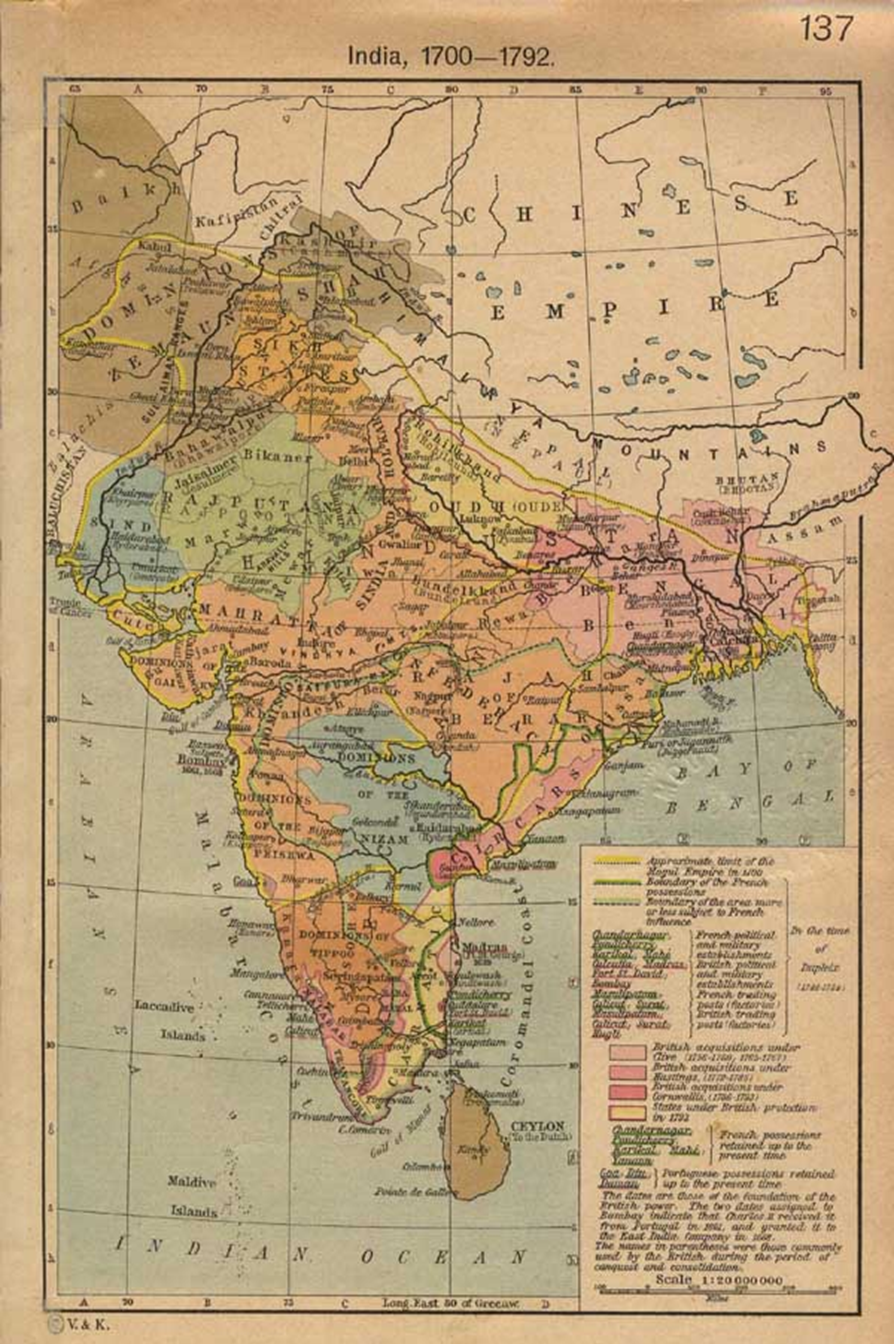
When the East India Company received its charter in 1600, its territorial ambitions were non-existent. The Company's initial footholds: Bombay (ceded by Portugal in 1661), Madras (acquired through local grants in 1639), and Calcutta (founded in 1690), were held under varying degrees of sovereignty. European maps of India in 1700 showed the Company’s possessions as mere dots along the coast, surrounded by the vast territories of the Mughal Empire, the Maratha confederacy, and the Deccan sultanates (Dodwell, 1932).

At Bombay, the Company exercised clear sovereign powers under the English crown. At Madras and Calcutta, the Company held lands under grants from Indian rulers, paying quit-rents and acknowledging their theoretical overlordship. The War of the Austrian Succession (1744-48) marked the turning point. The conflict demonstrated both the decay of Indian state systems and the superiority of European military methods. When Madras fell to the French in 1746, the Nawab of the Carnatic, Anwar-ud-din Khan, found himself powerless to intervene. The British learned a lesson that European powers could now dictate terms to Indian princes (Dodwell, 1932).
The Carnatic Wars: From Trade to Territorial Ambition (1740–1763)
During the war of Austrian Succession (1744-48), when the French and English fought on Indian soil, the Nawab of the Carnatic proved powerless to stop them. The Anglo-French struggle in the Carnatic (1749–54) introduced a new pattern of territorial acquisition, where European powers began to claim territory as rewards for supporting rival Indian claimants (James, 1997).

Dupleix, the French governor, secured grants of territory from his protégés - districts of Pondicherry, and later the Northern Sarkars on the Orissa coast. The English responded by taking St. Thomé and later on claimed the right to intervene in Tanjore. By the end of the Seven Years’ War (1763), the French were expelled from India, and the English held Madras, Fort St. David, and the Northern Sarkars (ceded by the Nizam in 1766). These were still coastal enclaves, but the principle that European powers could acquire Indian territory through treaty and conquest was firmly established (Dodwell, 1932).
Bengal: First Territorial Acquisition
The real breakthrough came in Bengal. In 1756-57, Siraj-ud-Daulah was the Nawab of Bengal Subah, which consisted of Bengal (including current Bangladesh), parts of current Bihar, Jharkhand and Orissa. In the Battle of Plassey in 1757, the East India Company (under Robert Clive) defeated Nawab Siraj-ud-Daulah, aided by the internal betrayal of his uncle Mir Jafar. This victory gave the Company a political foothold in Bengal. The decisive shift came with the Battle of Buxar in 1764, where British forces defeated the combined armies of the Nawab of Bengal, the Nawab of Awadh, and the Mughal Emperor, ending the Treaty of Allahabad (Dodwell, 1932).

In 1765, the Mughal emperor granted the Company the Diwani rights (revenue collection) for Bengal, Bihar, and Orissa, marking the formal start of British colonial rule in eastern India. This grant was a masterpiece of political expediency. By holding the revenue administration as deputies of the Mughal emperor rather than as conquerors, the Company avoided the full responsibilities of sovereignty while enjoying its fruits. The Nawab of Bengal was reduced to a pensioned figurehead, and the dual system of government was established (Dodwell, 1932).
Mysore
The southern state of Mysore rose to prominence under the dynamic leadership of Hyder Ali and his son Tipu Sultan. They modernised their army, aggressively expanded their territories, and posed a significant challenge to the British in the Anglo-Mysore Wars. Tipu continued his father's resistance with military innovations like iron-cased rockets. However, Mysore's expansionist ambitions and repeated conflicts with the British eventually led to its downfall (Dodwell, 1932).
In the crucial Fourth Anglo-Mysore War (1798-1799), the British East India Company formed a formidable alliance with both the Marathas and the Nizam of Hyderabad. This combined strength overwhelmed Mysore, culminating in the siege of Seringapatam in 1799, where Tipu Sultan was killed, effectively ending Mysore's independence and paving the way for greater British control in the south (Dodwell, 1932).


The Marathas: Breaking of the Continental Power
The Maratha confederacy represented the greatest obstacle to British supremacy. Amidst this internal rivalry of the Maratha confederate states, the British capitalised on their disunity. The First Maratha War (1775-82) ended indecisively with the Treaty of Salbai (1782), but it established the British as a principal in Indian politics. The treaty proved a turning point. It secured peace with the Marathas for twenty years, during which time the British consolidated their position in Bengal and Mysore (Dodwell, 1932; James, 1997).
Lord Wellesley's arrival as governor-general in 1798 marked a decisive shift toward aggressive expansion. In the Treaty of Bassein (1802) with the Peshwa Baji Rao II, he agreed to maintain British troops in his dominions and to conduct no negotiations with other powers without British consent (Dodwell, 1932; James, 1997).
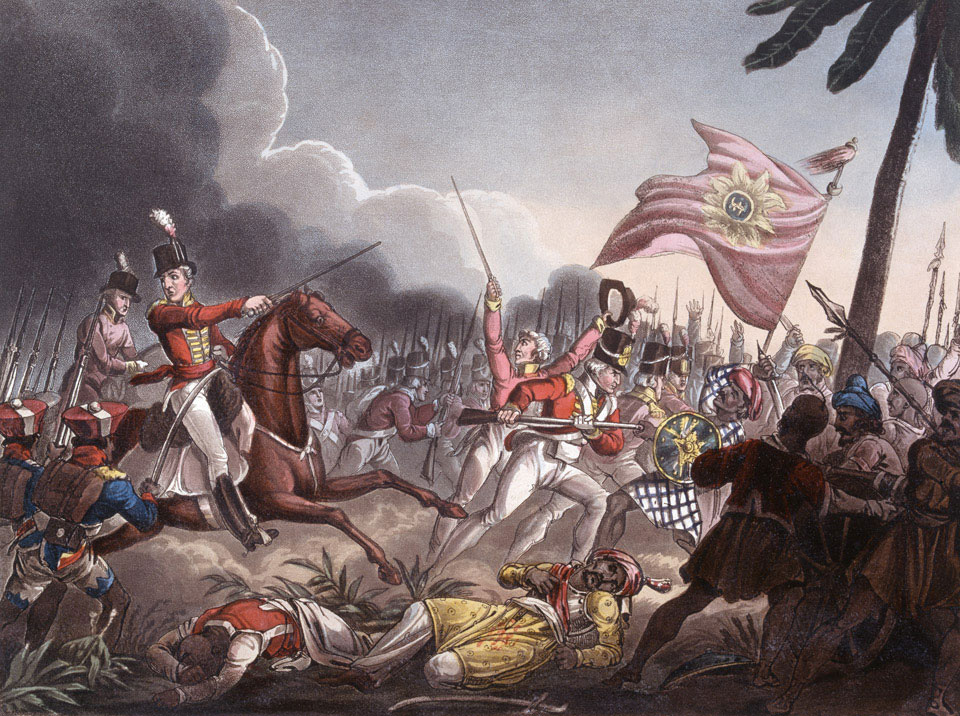
This treaty sparked the Second Anglo-Maratha War (1803–1805), in which the British decisively defeated key Maratha leaders like the Scindias and Bhonsles, forcing them into subsidiary alliances. The treaties of Deogaon and Surji Arjungaon (1803) brought vast territories under British control, including Delhi and the person of the Mughal emperor himself. Finally, the Third Anglo-Maratha War (1817–1818) marked the empire’s complete downfall. Peshwa Baji Rao II was defeated, exiled, and pensioned off, while other Maratha rulers were reduced to British protectorates (Dodwell, 1932).
This final conflict effectively dismantled the Maratha political structure and brought large parts of India under direct or indirect British control, marking the consolidation of British supremacy and the end of Maratha sovereignty.

Sind and Punjab: Frontier Conquest
The conquest of Sind (1843) and the Panjab (1849) represented a different kind of expansion—one driven by frontier security and the logic of military necessity. Sind had been nominally subject to Afghanistan but was effectively independent under the Talpura Amirs. British relations with Sind were governed by treaties guaranteeing free navigation of the Indus, but the amirs' suspected intrigues with Persia and their obstruction of British military movements during the First Afghan War led to confrontation. The battles under Sir Charles Napier were swift and brutal, shattering Amir’s forces and annexing the province of Sind (Dodwell, 1932).

The Panjab under Ranjit Singh had been a friendly power, maintaining a careful balance between the British and the Afghans. Ranjit Singh's death in 1839 plunged the Sikh kingdom into anarchy, with factions contending for power and the army emerging as an independent political force (Muir, 1917).

The First Sikh War (1845-46) followed Sikh incursions across the Sutlej; the battles of Mudki, Ferozeshah, and Sobraon broke Sikh power, and the Treaty of Lahore (1846) reduced the Panjab to British protection. After the second Sikh war in 1848, Lord Dalhousie ended the Sikh resistance and formally annexed the Punjab (Dodwell, 1932).
Expansion in North-East: Burma
The First Burmese War (1824-26) was provoked by Burmese incursions into Assam and Arakan and their refusal to recognize British authority on the frontier. The Treaty of Yandabo (1826) gave the British Arakan, Tenasserim, and Assam—territories that extended British influence to the borders of China (James, 1997).

The Second Burmese War (1852) was more controversial. When the governor of Rangoon extorted money from British merchants, Dalhousie sent a naval squadron to demand redress. There, Commodore Lambert's over-hasty actions led to bombardment, and General Godwin's forces quickly occupied Lower Burma. Dalhousie, who had hoped to avoid war, now faced the problem of what to do with the conquered territory. He decided against advancing into Upper Burma and annexed lower Burma, giving Britain control of the Irrawaddy delta and the teak forests (James, 1997).
End of an era
Thus, Britain’s territorial expansion in India unfolded in three distinct phases, each marked by shifts in strategy and ambition. The first phase, spanning roughly from 1757 to 1798, was one of cautious yet deliberate consolidation. This era was less about outright conquest than about establishing strategic footholds, using a blend of military victory and diplomatic maneuvering (Muir, 1917).
The beginning of the nineteenth century brought in the second phase of more aggressive expansion. It was defined by the systematic subjugation of India’s major native powers and the use of the Subsidiary Alliance as a formidable instrument of control. By the end of this era around 1823, the East India Company had decisively shattered any remaining balance of power, emerging not as a rival claimant but as the undisputed paramount authority across the subcontinent (Muir, 1917).
The third and final phase, spanning from the mid-1820s to the eve of the 1857 Rebellion, was driven by consolidation, strategic frontier defense, and the absorption of the last remaining independent states. By the time of this final acquisition, the British had completed their transformation from coastal traders to continental sovereigns and consolidated a territorial empire that stretched from the Himalayas to the Indian Ocean (Muir, 1917).

The annexations had brought vast territories and revenues under British control. After the rebellion of 1857, The Mughal emperor was deposed and exiled; the East India Company was abolished; and India passed directly to the Crown. The British annexation of India was, in retrospect, neither a grand design nor a simple accident. Each annexation created new frontiers and new insecurities, which in turn required further expansion. The doctrine of lapse, the subsidiary alliance, and the claim to reform misgovernment were all rationalizations of a process driven by deeper forces.
The Theory and Practice of Sovereignty
Throughout this process of expansion, the British struggled to define the legal basis of their authority. It kept changing and evolving with the gradual expansion of the company’s rule and British paramountcy.
Early British Expansion and the ‘Ring-Fence’ Policy (c. 1757 - 1798) - Although, initially the East India Company was focused on trade, As the Company transitioned into a territorial power, the British Parliament began to assert control over its activities through acts like Lord North's Regulating Act of 1773. During this initial period, which extended broadly up to 1813 (though with exceptions like Wellesley's tenure), the Company's policy was generally one of ‘ring-fence’ of friendly states. Associated with Warren Hastings, this policy aimed to confine British commitments and avoid the expense and danger of involvement beyond the Company's territorial acquisitions (Muir, 1917, Dodwell, 1932).

This approach essentially sought to create a defensive perimeter around the Company's territories. The wars during this phase added significant territory to British India, but the pattern remained one of selective annexation rather than wholesale conquest. The Company preferred to rule through Indian intermediaries, collecting revenue while avoiding the direct administration of large territories (Muir, 1917, Dodwell, 1932).
The Subsidiary Alliance System - A significant shift occurred with Lord Wellesley, Governor-General from 1798 to 1805. Convinced that British security required the elimination of French influence and the reduction of all Indian powers to dependency, Wellesley disregarded instructions to maintain peace and avoid meddling with Indian rulers. His most impactful policy was the institution of subsidiary alliances. Under this system:
Indian states accepting the alliance were forbidden to wage wars or negotiate with other states without the Company's consent.
Larger states had to maintain armies commanded by British officers, ceding territories for their upkeep. Smaller states paid tribute.
The Company, in return, committed to protecting these states from external aggression and internal rebellion.
A British Resident was installed in each allied state, effectively giving the Governor-General a presence by proxy

He targeted and annexed large territories from states like Mysore (1799), Carnatic (1801) and territories under the Maratha empire (1803-5). This system ensured the fidelity of the allied states, allowed the British to deploy their military forces strategically at the states' expense, and critically undermined the internal independence of these states, paving the way for British paramountcy (Muir, 1917, Dodwell, 1932).
Lord Hastings' Settlements, ‘Subordinate Isolation’ and the Assertion of Paramountcy (1813-1823) -Francis Rawdon-Hastings (Governor-General 1813-1823) pushed Wellesley's imperialistic policies to their logical conclusion. His tenure was marked by successful campaigns that broke the Maratha power and crushed the Pindaris. This period saw the earlier ‘ring-fence’ policy definitively replaced by a policy described as ‘subordinate isolation’. It emphasized limiting princely states’ external agency and keeping them as subordinate dependencies. Treaties shifted from emphasising mutual amity to demanding cooperation, allegiance, and loyalty from Indian states (Muir, 1917, Dodwell, 1932).
The fiction of the Governor-General being a servant of the Mughal Empire was discarded. The principle of paramountcy was vigorously asserted during this era. Officials like Metcalfe and Ochterlony articulated the doctrine of paramountcy, asserting the British government's role as the supreme guardian of general tranquillity, law, and right, even responsible for maintaining legal succession in states. This supremacy was considered to exist independently of treaties (Muir, 1917, Dodwell, 1932).
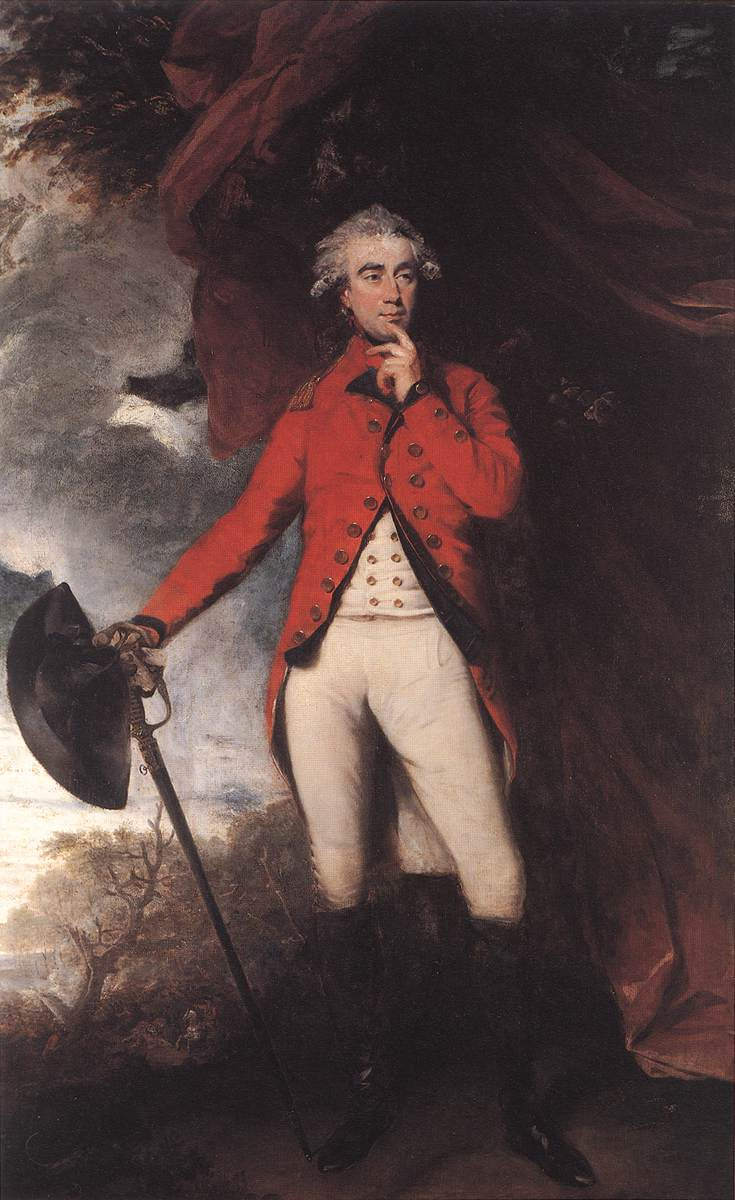
Impact of the Subsidiary Alliance System on Princely States - The subsidiary alliance system had profound and often detrimental effects on the princely states. The British guarantee of protection against both external threats and internal rebellions removed the rulers' incentives for good governance. Misrule often went unchecked as princes, secure on their thrones due to British support, no longer needed to cultivate the goodwill of their subjects or maintain administrative efficiency (Muir, 1917, Dodwell, 1932).
The London Times in 1853 described the situation in many states as ‘chronic anarchy’, where revenues were squandered and the people suffered under heavy, arbitrary taxation. The Company's Residents evolved from diplomatic agents into controlling officers, deeply interfering in the internal affairs of the states, yet little was done to alleviate the widespread misgovernance. For some, these states became grounds for exercising power without responsibility (Muir, 1917, Dodwell, 1932).
Doctrine of Lapse and Completion of British Annexations - The final stage of British expansion was systematized under Lord Dalhousie (1848-56). Dalhousie applied the "doctrine of lapse" with unprecedented rigor, asserting that dependent states without natural heirs would revert to British sovereignty upon their rulers' deaths (Dodwell, 1932).
Each annexation was justified by the absence of direct heirs, but the cumulative effect was to suggest that the British intended to absorb all of India. This re-molding of the states' structure, largely established by 1819, was thus further cemented, leading to a political and administrative system previously unknown in Indian history, with a clear hierarchy of authority ultimately subordinate to powers in England (Muir, 1917, Dodwell, 1932).

Changing nature of Sovereignty
Throughout these phases, the legal basis of British territorial possession evolved. In the early eighteenth century, the Company held its settlements as a zamindar, paying revenue to Indian rulers. After Plassey, it claimed the right to collect revenues without claiming sovereignty. The Treaty of Allahabad (1765) established the Company as diwan (fiscal officer of Mughal Empire) of Bengal (Muir, 1917; James, 1997).
The Regulating Act (1773) and Pitt’s India Act (1784) avoided defining British sovereignty, allowing the Company to govern territories acquired by treaty or conquest, without formally claiming them for the Crown. International recognition followed with the Treaty of Paris (1814), in which France acknowledged British sovereignty in India (Muir, 1917; James, 1997).

Yet even as British sovereignty was established in law, forms of Indian rule were preserved. The Mughal emperor continued to receive honors and respect; princes retained their titles and internal autonomy. The Company's rupee, until 1835, was struck in the emperor's name. This dual system of British power wrapped in Indian forms, characterized the Raj until the 1857 rebellion and presented a more direct assertion of authority (Muir, 1917; James, 1997).
Conclusion
By 1856, when Dalhousie left India, the territorial transformation was nearly complete. From a handful of coastal trading posts, the East India Company had acquired an empire stretching from the Indus to the Irrawaddy, and from the Himalayas to Cape Comorin (Kanyakumari). The Maratha power had been broken, the Sikhs had been conquered, Burma was annexed, and the Indian princes were reduced to pensioned dependents.
The territorial landscape of British India was the product of war and treaty, commercial ambition and strategic alliances. Each conquest created new frontiers and new insecurities, requiring further expansions. When the Crown took direct control after the Mutiny of 1857, it inherited a territorial structure that had been shaped by two centuries of conflict, diplomacy, and relentless expansion.
Sources:
Dodwell, H. H. (Ed.). (1932). The Indian Empire: Volume V. Cambridge University Press.
James, L. (1997). Raj: The Making and Unmaking of British India. Hachette.
Muir, R. (1917). The Making of British India 1756-1858 (2nd ed.). Manchester University Press.


Comments