
1 | Introducing Censusnama: Understanding India through Census
- Apr 17
- 10 min read
By Shivakumar Jolad, Gaurav Kalyani and Nishitha Mandava (author details below)
The 16th decennial Census of India—originally due in 2021—has been delayed by six years, the first such disruption since synchronous censuses began in 1881. With the last census conducted in 2011, India has been operating with data that is over a decade old, creating a serious deficit in a rapidly changing society. This gap has affected welfare allocation, poverty estimates, administrative planning, and our understanding of migration and urbanization, while also weakening the reliability of surveys built on outdated population frames. There is now reason for cautious optimism: from Apr 1, 2026 India has begun the monumental exercise of enumerating over 1.4 billion people. This is the world's largest peace time administrative exercise involving nearly 3 million people.
The census is not merely a headcount; it offers a comprehensive snapshot of society at a given moment. It captures population composition across dimensions such as age, sex, religion, caste, language, literacy, occupation, and living conditions, at highly granular levels down to villages and urban wards. This allows the state to map social structure, spatial distribution, and inequalities with considerable precision.
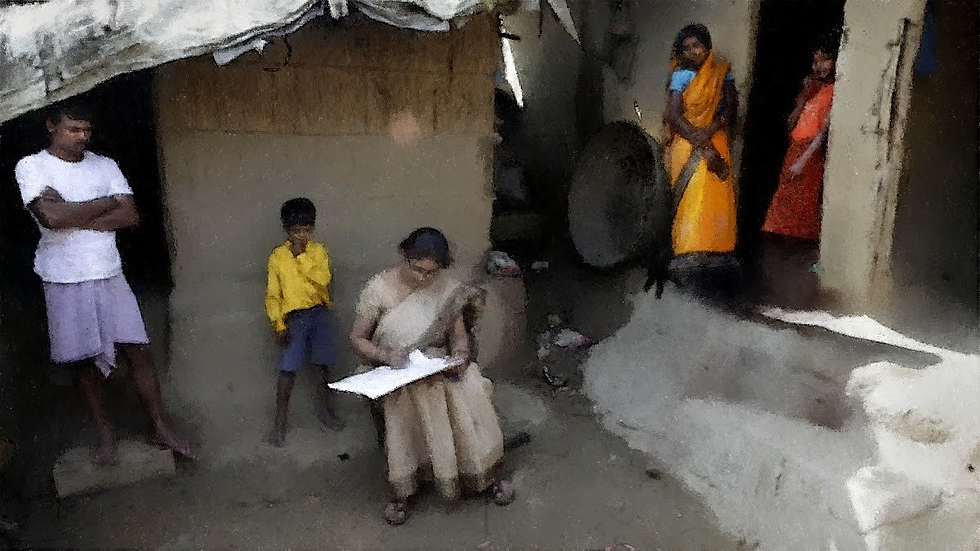
Census data shape democratic representation through delimitation, influence the balance of federal power, guide resource allocation, and underpin welfare targeting. They also inform long-term planning in sectors such as health, education, and infrastructure. In this sense, the census functions as a foundational tool of governance, structuring policy and state action for the decade that follows.
Recently public discourse on Census has centered around:
Debates over caste enumeration and social mobility, and affirmative action.
Implementation of women’s reservation in legislatures
Federal tensions between northern and southern states over population-based representation
Asymmetric fiscal Devolution across the states
District administrators await updated District Census Handbooks for planning service delivery. In the past fifteen years, districts have proliferated rapidly; many newly created districts still operate with outdated population baselines. Local governments—Panchayats, Municipalities, and Municipal Corporations—have continued to rely on 2011 data, even as population growth, migration has been uneven and spatially concentrated.
India’s statistical system depends on the Census as a denominator: fertility rates, literacy rates, workforce participation, poverty estimates, and sampling frames all require accurate population counts. Policymakers need updated population structures to design welfare and infrastructure investments. Economists, demographers, policy researchers, and social scientists in general await fresh data to understand migration, urbanisation, language shifts, and the changing social fabric. The media anticipates political implications—especially regarding caste and delimitation.
Census 2027


The first phase of Census 2027 Houselisting operations (April 1 to Sept 30), in all states and union territories. This new census introduces for the first time digital enumeration, option for self-enumeration, and has expanded socio-economic questions. With 33 questions, the houselisting phase captures housing quality, family composition, and social category, and measures economic status through ownership , basic amenities (water, sanitation, electricity, and cooking fuel), along with household assets and digital access like phones and internet. Rather than direct income, it relies on these proxies to assess living standards, underscoring the census as a tool for mapping everyday conditions and supporting welfare delivery.
The second phase , population enumeration (Feb 2027, barring snow clad regions in J&K , Himachal Pradesh, and Uttarakhand), will focus on population, age composition, education, mother tongue, caste, migration and fertility. It will highlight the differential growth rate across the states, reigniting debates on population change and development and fiscal devolution across the states. For the first time since 1931, detailed Caste enumeration will take place, likely shuffling the equations of caste and reservation and caste and political representation.
The Census captures the demographic transition - impact of fertility and mortality decline, urbanization and urban growth, Urban agglomerations. India’s fertility rates across all states have declined rapidly to below replacement rate, at a rate far beyond what demographers expected. The Census will show its impact on the declining child population decline and bulging youth population at a granular level which no survey can accomplish. Census provides spatial distribution of population, across the administrative boundaries from the state and district to the lowest admin level of village and wards. This will provide an accurate sampling frame for the future surveys providing a robust spatial and statistical foundation for governance and research in the decade ahead.

The history of the Indian Census is inseparable from the history of the Indian state itself. The conquest of India by the East India Company was not only a political and economic project but also an epistemic one—an attempt to systematically map, classify, and understand a vast and diverse subcontinent. This impulse found expression in a series of ambitious surveys: the route surveys led by James Rennell, the topographical surveys of Mysore and southern India under Colin Mackenzie, and the monumental Great Trigonometric Survey of India initiated by William Lambton and later continued by George Everest (Clements R Markham, 1878). Alongside these geographical projects, early educational surveys in Madras (under Thomas Munro), Bengal (William Adam), and Bombay (Mountstuart Elphinstone) began documenting indigenous institutions, including schools and patterns of enrolment (Rao, 2025/2025). Enumeration, in other words, emerged as a central tool of governance.
The evolution of census-taking in the early nineteenth century offers a revealing lens into how colonial administrators sought to comprehend Indian society. Early efforts were fragmented and experimental, focusing on estimating populations of cities and districts while attempting to classify people by varna, caste, religion, language (“tongues”), and tribal identity (“aboriginals”)(Natarajan, 1971; Waterfield, 1875, Dyson, 2018). These exercises were often shaped by limited understanding, leading to crude and sometimes deeply biased classifications. Yet, they marked the beginning of a systematic effort to render Indian society legible to the state.
The first asynchronous, all-India census in 1872 represented a major turning point. Covering British Indian provinces and select princely states such as Mysore, it provided unprecedented detail on population size, sex ratios, religious composition, and the complex problem of caste classification across regions (Natarajan, 1971b, 1971b; Waterfield, 1875). Over time, the census became more methodologically rigorous and administratively comprehensive. Improvements in enumeration techniques, better geographic coverage, and more refined categories—age groups, caste and tribe classifications, language, literacy, and occupation—reflected a maturing system. Importantly, successive censuses also began recording inter-censal changes, documenting the demographic impact of famines, epidemics, and other shocks, thereby creating a longitudinal archive of India’s social and demographic transformation.

Equally significant is the evolution of classification itself. Early colonial categories were often shaped by racial, ethnographic, and even eugenic assumptions. However, by the early twentieth century, these classifications became more standardized and empirically grounded. Caste and tribe enumeration, for instance, was progressively refined, eventually forming the basis for the identification of “Depressed Classes” and “Tribes,” which later informed the constitutional categories of Scheduled Castes and Scheduled Tribes (J. H. Hutton, 1933; Simhadri & Ramagoud, 2022).
These classifications would go on to shape postcolonial policies of affirmative action, including later exercises such as the Mandal Commission’s identification of Other Backward Classes (Chandrachud, 2025). Similarly, linguistic classification matured through the monumental Linguistic Survey of India led by George Abraham Grierson, with the 1901 Census offering one of the earliest systematic accounts of India’s language families and diversity (Grierson, 1903).
Beyond social classification, the census also serves as a continuous record of India’s political and administrative evolution. It documents boundary changes across districts, provinces, and princely states, offering a longitudinal view of territorial transformation—from the partition of Bengal and the separation of Burma to provincial reorganizations under colonial rule. In the post-Independence period, census records capture the integration of princely states, the consolidation of administrative units, the exchange of enclaves, linguistic reorganization, and the creation of new states driven by ethnic, tribal, and developmental aspirations (Natarajan, 1971b). It has also, at times, reflected moments of internal conflict and upheaval, including disturbances in regions such as Assam, Punjab, and Kashmir (Narayan, 2023).
Finally, the census chronicles the changing socio-economic landscape of India. It tracks processes such as urbanization, the rise and decline of cities, shifts in occupational structures, and transformations in living standards. From the growth of colonial port cities to the expansion of postcolonial metropolitan regions, the census provides a continuous empirical account of India’s transition from a predominantly agrarian society to an increasingly urban and diversified economy.
Thus the Indian census is far more than a statistical exercise. It is a historical archive of India’s evolution—of its society, state, and economy. To read the census carefully is to trace the making of modern India itself.
Why Censusnama?
Censusnama is a long-form series that traces the evolution of the Indian Census—from its early origins in the colonial era to present. Censusnama will give an overview of the complex administrative and technical exercise of making the Census and the core results of the Census every decade. The series will place the Census process and its findings within a broader political and social context of the era.
Each decennial Census has been a mirror to its time: famine, plague, migration and urbanization, world wars, Partition, linguistic reorganisation, Green Revolution, liberalisation, demographic transitions, decentralisation, insurgency —all leave their imprint on enumeration. Tracing the evolution of the Indian Census helps us understand how understanding of India has evolved and the lens through which the British administrators and the Indian authorities saw and documented the Indian population.
This series traces how the Census mapped India —and how that mapping shaped India.
Across this journey, we will explore:
Demographic profile of India at the National, Provincial/State and District level in each Census
Cartographic transformations and administrative boundary changes.
How the Census classified caste—and how caste classified politics
The politics of language data
Urbanisation thresholds and city definitions, and Urban evolution
The relationship between Census data and delimitation
The evolution of occupation categories
Approach to the Series
Adopting a chronological approach, this series takes readers on an expansive journey across centuries of enumeration and surveying in India, encompassing histories of wars, famines, policy-making, identity politics, partition, and postcolonial nation-building.
We begin by documenting the early efforts to estimate populations in worlds untouched by European colonialism and capitalism. The rise of the East India Company and its urge to render its most lucrative colony into hard ‘facts’ to aid administration and construct a spatial image of the empire, forms the subject of the next essay. It was the age of the Survey of India, of triangulations and gazetteers, of a colonial state learning to govern its subjects. The 1857 Uprising only intensified these efforts, setting the stage for the landmark 1872 census, which marked India’s first pan-national count in all its patchy, non-synchronous glory. It set out to cover ambitious ground, including sex ratios, caste, religion, and education. The 1881 census marked a new era in surveying. Synchronous for the first time, this census standardized classifications, introduced language recording, and captured the devastating consequences of the Deccan Famine.
The 1891 census expanded into new territory, including Kashmir, Sikkim and Burma, while sharpening the distinction between religious division and social class. Then came 1901, Herbert Hope Risley's caste-focused opus. It was essentially a taxonomy of tribe and community, an unsettling account of plague, and one of the first serious engagements with themes of urbanisation and migration. George Grierson's monumental twenty-one-volume Linguistic Survey warrants its own dedicated discussion.
The 1911 census again bore witness to the plague, tracking population across a range of variables such as age, religion, occupation, and infirmity. The last caste census before independence was the 1931 census, whose meticulous enumeration shaped the representation of the Other Backward Classes (OBCs) decades later. The 1941 census arrived at the onset of the Second World War, bearing the imprint of the War; it was truncated and incomplete. But its religious demographics proved critical, as they were the same numbers used to draw the lines of the 1947 Partition, an epochal moment in world history.
Amid the refugee crisis of postcolonial India and the Census Act of 1948, Independent India’s first census was undertaken in 1951. It helped architect the first Five-Year Plan and India's inaugural general elections. The 1961 census, possibly one of the finest, drew the modern map, pioneered village-level monographs, and first systematically mapped the remote frontier of the North-East Frontier Agency. The 1971 census delivered a demographic baseline that froze Lok Sabha seat allocations for decades, while the 1981 census expanded focus on urban studies amid Assam's unrest. 1991 captured India’s hinge point between the old economy and liberalisation, with its data now digitized for the first time. The 2001 and 2011 censuses close the series, the latter still informing India’s welfare policy today.
Along with historical overviews of census-making in India, these articles recognize that data collection is never a neutral endeavor. Buried across this data are histories of contested politics over the enumeration of caste, religion, and language. Bringing these contests to the forefront, we offer a synthesis of the overarching trends and transformations visible across almost two centuries of data collection in the Indian subcontinent.
In this series of articles, we aim to cover all the aforementioned topics of Indian Census in the coming months.
Looking ahead
As India awaits its next Census, questions arising before us are:
How will delimitation reshape parliamentary representation?
What will updated migration data reveal about internal mobility?
How have urban and peri-urban spaces grown since 2011?
What will new caste data mean for affirmative action debates?
How will demographic shifts influence federal balance?
To even begin to answer these questions, it is crucial to understand the historical evolution of census. Censusnama aims to bring this historical perspective by looking backward. The history of enumeration reveals how deeply numbers are entangled with nation-building. As we will attempt to demonstrate in our series, each decennial enumeration is far more than just a simple tally or a count, it mirrors the political and social anxieties and hierarchies, along with the economic transformations of its time. By tracing this evolution from the colonial period to the present moment, we can learn how the questionnaires, categories and the data are deeply entangled with power as well as social reform.
By looking at current issues of demlimitation, caste politics, resource allocation, though this historical lens reveals that these are not new issues, but rather a long-standing dialogue between the state and the people. Therefore it is crucial to engage with these issues with the understanding of how India has been historically counted and understood through the creation and negotiation of data. It is also essential in understanding the map of India, both its spatial boundaries and the complex socio-political contours. Therefore to understand India’s future, we must first understand how India has counted itself.
(Authors: Dr. Shivakumar Jolad works as Associate Professor (Public Policy), and is the Chair of Center for Legislative Education and Research and Director India State Stories, FLAME University, Pune
Gaurav Kalyani works as Research Associate for the India State Stories Project at the Center for Legislative Education and Research, FLAME University, Pune;
Nishitha Mandava, is an independent researcher and research consultant for
Center for Legislative Education and Research, FLAME University, Pune)
References:
Chandrachud, A. (2025). These Seats Are Reserved. Penguin Random House. https://www.penguin.co.in/book/this-seat-is-reserved/
Clements R Markham. (1878). A Memoir On The Indian Surveys. 2nd Ed. London. W H Allen And Co.,. http://archive.org/details/memoirontheindia025502mbp
Dyson, T. (2018). A Population History of India—From the First Modern People to the Present Day. Oxford University Press.
Grierson, G. A. (1903). Languages of India being A Reprint of Chapter on Languages—Census 1901 [Census of India 1901]. OFFICE OF THE SUPERINTENDENT OF GOVERNMENT PRINTING, INDIA. https://censusindia.gov.in/nada/index.php/catalog/31294
J. H. Hutton. (1933). Census Of India 1931. http://archive.org/details/CensusOfIndia1931
Narayan, M. K. (2023). A Treaties on Indian Census Since 1981. Census of India.
Natarajan, D. (1971a). Indian Census Through A Hundred Years—Part I. Census of India.
Natarajan, D. (1971b). Indian Census Through A Hundred Years—Part II. Census of India.
Rao, P. (2025). The Routledge Companion to the History of Education in India, 1780–1947. Routledge India. https://www.routledge.com/The-Routledge-Companion-to-the-History-of-Education-in-India-1780-1947/Rao/p/book/9781032797748
Simhadri, S., & Ramagoud, A. (2022). The Routledge handbook of the other backward classes in India: Thought, movements and development. Routledge.
Waterfield, H. (1875). Memorandum on the Census of British India 1871-1872.


Comments